

Whirlpool Bath Safety Features That Matter
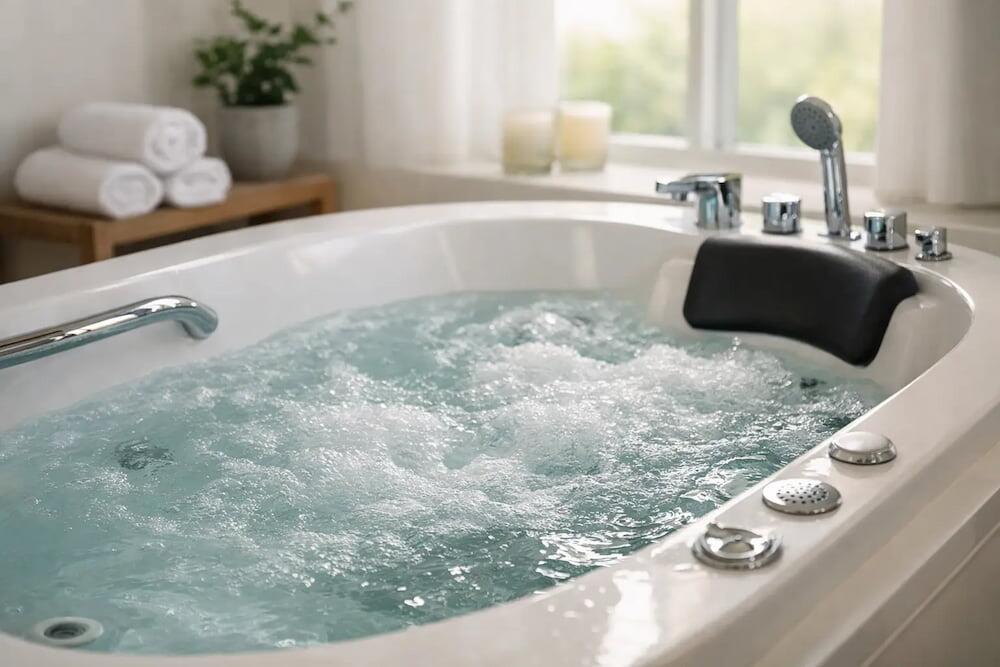
A whirlpool bath should make the end of the day feel calmer, not add uncertainty to a bathroom renovation. The right whirlpool bath safety features protect the people using it, support reliable day-to-day performance and make the bath easier to enjoy for years to come. For homeowners planning a premium bathroom, safety is not separate from luxury. It is part of what makes a spa-style bathing experience genuinely relaxing.
Start with safe electrical design
Whirlpool baths combine water, pumps, pipework and electrical components, so the quality of the electrical design matters as much as the style of the bath itself. A properly specified model keeps electrical parts protected from water ingress, while the pump and controls are designed for bathroom use.
Installation is just as important. In the UK, electrical work in a bathroom must be assessed carefully because bathrooms are divided into zones with specific requirements. Your installer should confirm that the whirlpool bath, its controls and its electrical supply are suitable for the room layout, and that any required protective device is in place. This is not an area for improvised wiring or a general plug socket positioned nearby.
Ask early where the pump will sit, how it will be accessed and how the bath will be connected. A good installation plan allows the bath to look beautifully integrated without burying the parts that may need inspection or servicing later. If you are renovating the whole room, decide this before tiling, boxing-in and fitting furniture begin.
Controls that are simple to use
Controls should be easy to identify and operate with wet hands. Depending on the bath, these may be pneumatic buttons, illuminated touch controls or a carefully positioned panel. The best choice depends on the design, but the principle stays the same: the user should be able to turn the system on and off without stretching, twisting or guessing which control does what.
For family bathrooms, a clear on/off function is especially useful. Children should always be supervised when using a whirlpool bath, but intuitive controls reduce the chance of the system being activated accidentally. It is also worth confirming whether the bath has a timer or automatic shut-off function, as these can prevent the pump from running longer than intended.
Whirlpool bath safety features for comfortable entry
A bath can have excellent technical protection and still be difficult to use if its shape does not suit the household. Entry and exit deserve proper attention, particularly for anyone with limited mobility, balance concerns or a preference for a more secure bathing position.
The internal base should offer a stable surface underfoot. Some baths include an anti-slip base, which can provide welcome reassurance without compromising the clean, luxurious appearance of the bathroom. This may be particularly valuable in a busy family home, although it is still sensible to use care when stepping in or out. Bath oils, soaps and shampoos can make any surface more slippery.
The height and depth of the bath matter too. A deeper whirlpool bath can feel wonderfully immersive, but it may be less convenient for a person who finds lifting their legs over a high rim difficult. Likewise, a compact shower bath can be a practical choice where space is limited, provided the bathing area remains comfortable and the rim height works for the people who will use it most.
Where extra support is needed, consider whether a discreet grab rail, a nearby stable surface or a bath step is appropriate. These choices need to be planned around the room rather than added as an afterthought. A rail must be fixed securely to suitable wall construction, not merely to a decorative panel or lightweight partition.
Water temperature and filling safety
A whirlpool system is designed to circulate water that is already in the bath. It does not replace sensible temperature control at the taps. A thermostatic mixer can help maintain a consistent, comfortable temperature and reduce the risk of sudden temperature changes caused by someone using water elsewhere in the home.
This is a worthwhile consideration for households with young children, older relatives or anyone with reduced sensitivity to heat. The precise temperature that feels comfortable varies from person to person, so avoid treating a very hot bath as a sign of luxury. A well-designed bathroom gives you control, not just intensity.
The overflow is another small but essential feature. Check that it is included, correctly positioned and compatible with the intended filler and waste arrangement. If you are choosing a freestanding or wall-mounted bath filler, ensure the water flow is appropriate for the bath’s capacity. A fast-running filler is convenient, but it should not make it easy to overfill the bath when attention drifts.
Hygiene features support safer bathing
Cleanliness has a direct bearing on confidence in a whirlpool bath. Water passes through jets and pipework, so the system should be cared for as part of normal bathroom maintenance. Following the manufacturer’s cleaning instructions helps prevent residue building up in places that are not visible from the bath surface.
Some whirlpool baths are designed with features that assist draining after use or make the system easier to clean. These are valuable because a low-maintenance system is more likely to be looked after properly. Ask what cleaning routine the model requires, which products are suitable, and whether the jets can be removed or accessed for routine care.
Avoid assuming that any bath cleaner is appropriate. Abrasive products can damage the finish, while heavily foaming bath products may not be suitable for every whirlpool system. The right approach is usually straightforward: rinse the bath after use, clean it regularly with approved products and run the recommended cleaning cycle when required.
Safe use begins before the jets start
The bath should be filled to the recommended level before the whirlpool system is switched on. Running jets without sufficient water can affect performance and may place unnecessary strain on the system. Everyone using the bath should know this simple rule, particularly in a household where more than one person will use it.
It is also sensible to keep loose electrical items well away from the bath area. Mobile phones, chargers, hair tools and extension leads do not belong near water, regardless of how carefully the room has been designed. A clear vanity area and well-positioned storage make this easier in everyday life.
Build safety into the installation details
A whirlpool bath is heavier than a standard empty bath once it is filled with water and occupied. The floor structure, bath supports and installation method must therefore be suitable for the model chosen. This is particularly relevant in upstairs bathrooms, period properties and conversions, where the existing floor may need closer assessment.
The bath must be level and fully supported so that it drains correctly and remains stable. Access panels should not be omitted simply to achieve a cleaner finish. They provide a route to the pump, pipework and connections if maintenance is needed, saving considerable disruption later.
Ventilation also plays a quiet but important role. Good extraction helps manage moisture, protects finishes and keeps the room more comfortable. A bathroom designed for long, relaxing baths benefits from ventilation that is capable of clearing steam effectively, rather than relying on an open window alone.
Before placing an order, it helps to confirm four practical points with your installer: the available floor space and access route, the location of the waste and water supplies, the electrical connection plan, and the route for servicing the pump. These details are less glamorous than choosing the bath shape or tap finish, but they are what allow the finished room to perform as it should.
Choosing the right safety balance for your home
The best whirlpool bath safety features are not always the longest specification list. They are the features that suit how your household actually uses the bathroom. A couple creating a private en-suite may prioritise deep, supportive seating and easy-clean jets. A family bathroom may place more value on anti-slip footing, thermostatic temperature control and controls that are straightforward for adults to manage.
The Spa Bath Co. has specialised in whirlpool bathing since 2003, and that specialist knowledge is useful when you are weighing up bath size, jet layout, installation requirements and long-term care. A bath should look impressive on day one, but it should also feel secure, comfortable and simple to live with long after the renovation is complete.
Choose a model that fits both the room and the people who will use it. When electrical planning, safe access, temperature control and cleaning are considered from the outset, your whirlpool bath becomes what it should be: a dependable place to slow down and enjoy a little everyday luxury.
Related reading
- Whirlpool Bath Installation Guide – electrical requirements, wet testing and key safety checks
- How to Clean Your Whirlpool Bath – practical hygiene routines that keep the system performing well
- How Do Whirlpool Baths Work? – understanding the system so you use it safely every time
- Bathe Easy Whirlpool Shower Baths – accessible designs that prioritise secure entry and exit
Frequently asked questions
Do I need a qualified electrician to install a whirlpool bath?
Yes. Electrical work in a bathroom must be carried out by a qualified electrician in accordance with current wiring regulations. This is essential for safety and to maintain the product warranty.
Should the bath be filled before the jets are switched on?
Yes. Always fill the bath to the recommended level (covering the highest jets) before activating the whirlpool system. Running the pump dry can affect performance and may damage the system.
Are anti-slip bases and grab rails worth considering?
For many households, yes. An anti-slip base provides reassurance underfoot, while a securely fixed grab rail or nearby stable surface can make entry and exit safer, particularly where mobility or balance is a concern.
How important is regular cleaning for safety?
Very. Proper cleaning of the jets and pipework helps maintain hygiene and reliable performance. Follow the manufacturer’s guidance and use suitable, non-abrasive products designed for whirlpool systems.