

The Future of Smart Spa Baths in Modern Homes
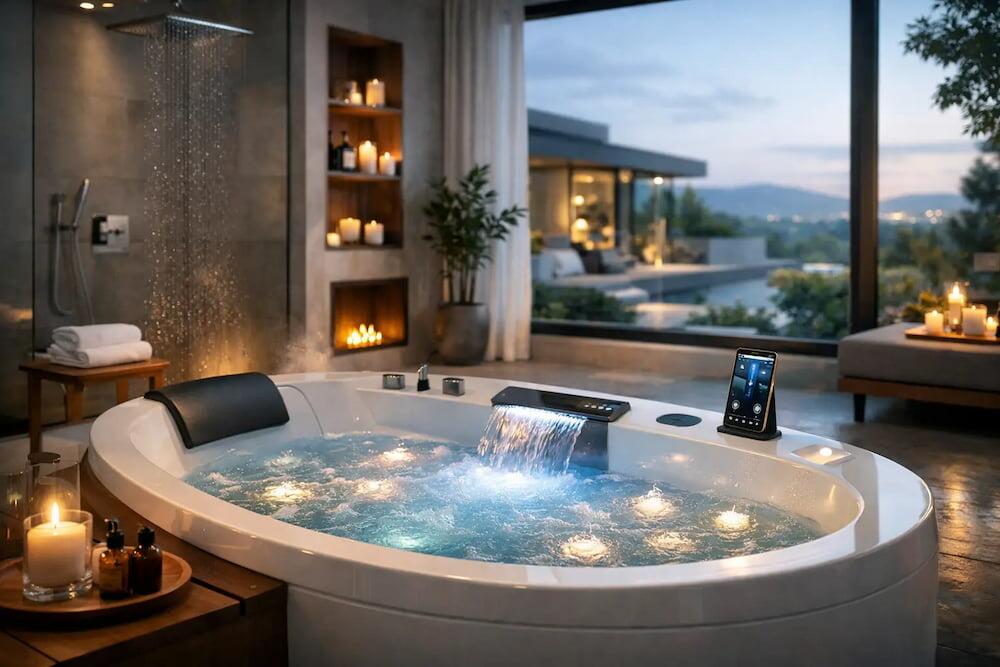
A spa bath should feel effortless at the end of a long day. You should not need to crouch beside the panel, second-guess the controls or tolerate a noisy pump just to enjoy a few minutes of massage. That expectation is shaping the future of smart spa baths: not technology for its own sake, but better control over comfort, atmosphere and day-to-day running costs.
For homeowners planning a bathroom renovation, this is good news. The next generation of intelligent bathing features is likely to make spa-style relaxation more tailored and easier to live with, while keeping the bath itself at the heart of the room. The most successful designs will still look considered and feel luxurious when the system is switched off.
The future of smart spa baths is more personal
A standard whirlpool bath gives you the pleasure of moving water and targeted jets. A smarter system can take that experience further by remembering how you like to bathe. Rather than repeatedly adjusting every setting, users may be able to select a preferred massage programme with the chosen jet intensity, duration and sequence already set.
That does not mean every bath needs a screen full of options. For many households, the best smart control will be a simple, waterproof panel with clear settings for a gentle wind-down, a more invigorating massage or a short post-exercise session. The intelligence sits behind the scenes, making the experience more consistent rather than more complicated.
There is also scope for more responsive hydrotherapy. Systems can vary jet output in stages, alternating between zones to create a more considered massage. This could be particularly appealing in larger baths with multiple seating positions, where one person may want a softer soak while another prefers stronger water movement.
The practical limit is personal preference. Some people enjoy experimenting with settings, while others want to fill the bath, press one button and relax. A well-designed smart spa bath should serve both, with manual controls that remain easy to understand.
Better controls, without a cluttered bathroom
The bathroom is not the place for fussy technology. Steam, splashes, cleaning products and busy family routines all demand controls that are dependable and straightforward. Future-facing spa baths are therefore likely to favour discreet touch panels, neatly integrated buttons and intuitive digital displays over complicated add-ons.
Programmes that suit real routines
Timed programmes are one of the most useful developments. A bathing session can finish automatically after a chosen period, helping to avoid leaving the system running longer than intended. This is convenient for households where the bathroom is shared, and it introduces a welcome degree of consistency for anyone using their spa bath as part of a regular wellbeing routine.
Some systems may also offer scheduled readiness features, such as preparing controls for a preferred evening routine. However, the bath must always be filled to the correct level before any whirlpool function operates. Smart features should support safe use, never remove the need for sensible bathing habits.
Lighting with a purpose
Integrated chromotherapy lighting is another area likely to become more refined. The aim is not to turn a bathroom into a light show. Soft, adjustable lighting can change the feel of a practical bathroom after dark, particularly in a family home where the same room needs to work hard in the morning and provide calm in the evening.
The strongest schemes will coordinate bath lighting with the wider room. Dimmable ceiling lights, a lit mirror and carefully chosen finishes can create a more complete spa-inspired setting than coloured lights alone. Smart controls are useful when they make these elements easier to set, not when they compete for attention.
Efficiency will matter as much as luxury
A high-quality spa bath is an investment in comfort, but homeowners are right to ask how it will perform over years of use. The future of smart spa baths will be shaped as much by efficient motors, quieter operation and thoughtful system design as by connected features.
Modern control systems can help manage pump operation more precisely, so the bath delivers the chosen experience without unnecessary running time. Improved insulation around pipework and more efficient components may also help retain the sense of luxury while reducing avoidable energy use. Actual running costs will still depend on bath size, water temperature, frequency of use and a household’s energy tariff, so broad promises should always be treated carefully.
Noise is equally important. A powerful whirlpool system is of little benefit if it overwhelms the room or disturbs the rest of the house. Advances in pump design, anti-vibration mounting and better installation practice should make quieter bathing a major priority. In a first-floor bathroom or an en-suite beside a bedroom, this can be every bit as valuable as an extra jet setting.
Maintenance could become more reassuring
A spa bath needs regular care to remain hygienic and perform as intended. That will not change. What may improve is the way a bath helps owners look after it.
Future systems could provide clear cleaning prompts after a set number of uses, guide the owner through a flush cycle or flag an issue that needs professional attention. This is more useful than a vague warning light, especially for first-time spa bath owners who want confidence that they are maintaining their investment correctly.
The best approach remains simple: follow the manufacturer’s cleaning guidance, use suitable products, keep the bath and fittings clean, and deal with any change in performance promptly. Smart diagnostics may make servicing more efficient, but they are not a substitute for proper installation or routine care.
Connectivity should be optional, not essential
App control and voice operation often attract attention, but they are not automatically the features that make a bathroom better. A bath should remain fully usable without a phone, home network or account login. Technology can become outdated far sooner than a well-made bath, so the core controls need to stand on their own.
That said, optional connectivity may suit some homes. It could allow owners to check maintenance reminders, store preferred settings or receive support information. For accessibility, clearly designed controls and the ability to save a familiar programme may be genuinely valuable.
Privacy and long-term support deserve consideration too. Before choosing a connected system, ask what data it collects, whether it can still operate if Wi-Fi fails, how software updates are handled and whether replacement parts will remain available. A specialist retailer should be able to explain the practical answer, rather than simply promoting the newest feature.
Plan the room around the bathing experience
A smart spa bath performs best when it is planned as part of the whole bathroom, not chosen as a final flourish. The available floor space, access for installation and servicing, electrical requirements, plumbing layout and structural suitability all need consideration early in the project.
For a renovation to run smoothly, discuss these points with your installer and bathroom specialist before finalising the bath:
- the bath’s dimensions, water capacity and comfortable internal bathing space;
- the position of the pump, pipework and any access panel needed for future servicing;
- suitable electrical provision and the work required from a qualified electrician;
- water pressure, waste arrangements and compatibility with the planned taps; and
- how the bath will relate to the shower, basin, storage and ventilation in the finished room.
This planning stage is where specialist knowledge has real value. A compact corner spa bath, for example, may be the right route for a smaller room, while a larger rectangular model can become the focal point of a more generous family bathroom. The feature set should follow the space and the way you live, rather than dictate it.
Choose lasting comfort over novelty
The most appealing smart spa baths will not feel like gadgets. They will be quieter, more comfortable, easier to clean and more intuitive to use. They will offer a controlled, tailored massage when you want it, then sit beautifully within a bathroom designed for everyday life.
When comparing options, start with the fundamentals: bath shape, build quality, jet layout, pump performance, ease of maintenance and installation requirements. Then consider which intelligent features will genuinely improve your routine. A well-chosen spa bath should make an ordinary evening feel more restorative for years to come – and that is the kind of future worth planning a bathroom around.