

P Shape Shower Baths for Smarter Family Bathrooms
P Shape Shower Baths for Smarter Family Bathrooms
A bathroom does not need to be large to feel indulgent. When there is only room for one main bathing fixture, P-shaped shower baths offer a practical way to keep the comfort of a bath while giving showering far more room than a standard straight design.
Their distinctive curved end creates a wider standing area exactly where it is needed, without taking up the footprint of a separate shower enclosure. For busy family bathrooms, guest bathrooms, and compact en-suites where a full bath is still wanted, this can be one of the most effective layout decisions you make.
What are P-shaped shower baths?
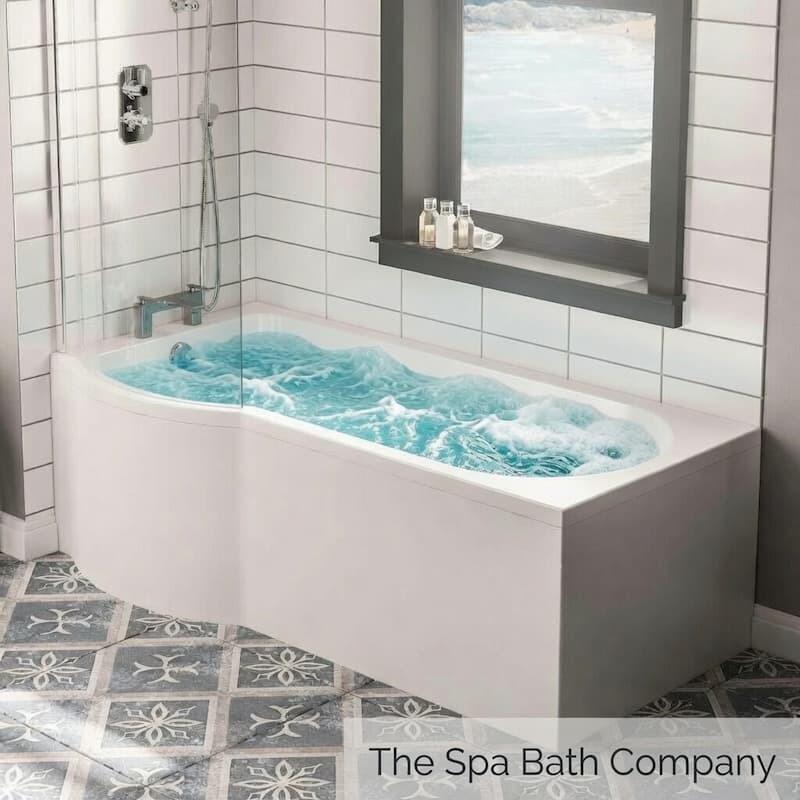
A P-shaped shower bath is a shower bath with one widened, rounded end. Viewed from above, the bath resembles the letter P: a straight side runs alongside the wall, while the showering end curves outward to create additional internal space.
Most are fitted with a matching curved shower screen, which follows the bath’s profile and helps contain splashes more effectively than a simple shower curtain. The result is a bath that remains comfortable for soaking, but feels much less restrictive when used as a shower.
This format is especially useful where a separate bath and shower would make the room feel crowded. Instead of treating a shower-over-bath arrangement as a compromise, a well-chosen P-shaped model can make it feel like a considered, comfortable part of the room.
Why choose a P-shaped shower bath?
The main benefit is the extra elbow room. A conventional straight bath is typically narrow all the way along, which can make showering feel confined, particularly for taller adults or households where the shower is used every day. The wider end of a P-shaped bath creates a more generous area for movement, without requiring a larger room overall.
There is also a visual advantage. The soft curve can break up a bathroom filled with straight lines from tiles, vanity units, and wall-hung furniture. In the right setting, it gives the room a more relaxed, contemporary look while remaining practical for children’s bath time, quick weekday showers, and a long evening soak.
For homeowners considering a spa-inspired renovation, the shape also provides a more inviting bathing experience than a basic shower tray. Add a carefully selected bath mixer, an overhead shower, or a modern shower system, and the room can feel noticeably more considered without becoming overly complicated.
That said, the P-shaped design is not automatically right for every bathroom. Its wider showering end needs clear floor space, so it is important to check that it will not obstruct a door, basin, toilet or drawer opening. In a very narrow room, a straight shower bath may still be the better fit.
Choosing the right size and orientation
Before falling for a particular style, measure the room carefully. Take the bath length, the maximum projection at the curved end, the position of wastes and pipework, and the clearance needed around doors and furniture into account. A bath that looks compact on a plan can feel very different once its widest point is in the room.
Lengths commonly suit standard bathroom layouts, often around 1500mm to 1700mm, but the depth and projection vary between designs. A shorter model can be valuable in a tighter space, although taller bathers may prefer the comfort of a 1700mm option where the room allows. Internal dimensions matter too, particularly if the bath will be used regularly for bathing rather than mainly as a shower base.
Left-handed or right-handed?
This is one of the most important checks. The handedness refers to the position of the wider, curved end when you face the bath from the front. A left-handed P-shaped bath has the expanded showering end on the left; a right-handed version has it on the right.
Do not rely on an image alone, as product photographs can be mirrored. Stand at the planned front edge of the bath, face it as you would in the finished bathroom, then identify which side needs the wider end. Getting this right ensures the screen, taps, basin and access route all work together.
Think about the shower screen early
A matching curved screen is more than a finishing touch. It is designed to sit correctly against the bath rim and follow its curve, giving better splash protection than a flat panel forced onto an unsuitable shape. Screens are usually fixed at the wall with a hinged section for access, though the exact opening and fixings differ by model.
Consider where the screen will swing and whether it could meet a towel radiator, window sill or vanity unit. If easy cleaning is a priority, look for practical details such as smooth glass surfaces and fittings that allow good access to the bath edge.
Bath material, fittings, and everyday comfort
Many P-shaped shower baths are made from sanitary acrylic. It is a popular choice because it is warm to the touch, relatively light compared with some alternatives, and available in clean, glossy finishes that suit contemporary bathroom suites. A properly supported acrylic bath also offers dependable day-to-day performance, but installation matters. The frame, legs and wall fixing should be fitted securely by a competent installer so the bath is level and stable.
The bath panel deserves attention as well. A matching curved panel gives the installation a neat, integrated appearance, while a removable panel can make future access to plumbing more straightforward. Whichever option you choose, ensure the bath, panel and screen are specified as compatible products rather than assuming similar curves will align.
Tap placement is another detail with a real impact on use. Deck-mounted taps may be positioned at the narrower end, depending on the model, while a wall-mounted shower valve can create a cleaner bath rim and give flexibility over shower height. A thermostatic shower valve is particularly worthwhile in a family bathroom, helping maintain a safer, steadier water temperature when other taps are running elsewhere in the house.
If the room is being upgraded for relaxation as well as utility, a whirlpool bath version may be worth considering. It combines the wider showering zone of the P-shaped design with targeted water massage for a more restorative soak.
Planning a bathroom around P-shaped shower baths
A P-shaped bath works best when the rest of the room supports its shape rather than competing with it. Keep the widest end visually open where possible. A wall-hung basin, compact vanity unit, or slimline towel radiator can preserve valuable circulation space and prevent the room from feeling cramped.
Tile choices can help, too. Large-format wall tiles or calm, continuous finishes reduce visual clutter, while a recessed shelf in the shower area can remove the need for bulky storage caddies. Good lighting is equally valuable: bright, practical light around the shower makes the space easier to use, while softer ambient lighting can make a bath feel more relaxing in the evening.
Ventilation should never be an afterthought. A shower-over-bath arrangement produces regular moisture, so an appropriately specified extractor fan and effective heating will help manage condensation and protect finishes over time. It is a less glamorous element of a bathroom project, but it makes a considerable difference to how well the room performs.
Is a P-shaped bath right for your home?
For a household that wants both a bath and a comfortable shower without sacrificing an entire wall to a separate enclosure, the answer is often yes. P-shaped shower baths are particularly well suited to family homes, shared bathrooms and renovation projects where every centimetre has to earn its place.
They are less ideal where the room is exceptionally narrow, where access around the curved end is limited, or where a dedicated walk-in shower is the priority. The best choice depends on how the bathroom is used most often. A home with young children may value the bath itself; a couple renovating for daily showering may place more emphasis on screen size, shower performance, and storage.
At The Spa Bath Co., specialist bathroom knowledge starts with these practical questions, not just the look of the finished room. Measure carefully, confirm the handedness, and choose fittings that support the way you live. Done well, a P-shaped shower bath gives a compact bathroom the freedom to handle busy mornings and quieter moments of relaxation with equal ease.