

How to Remove a Spa Bath Safely
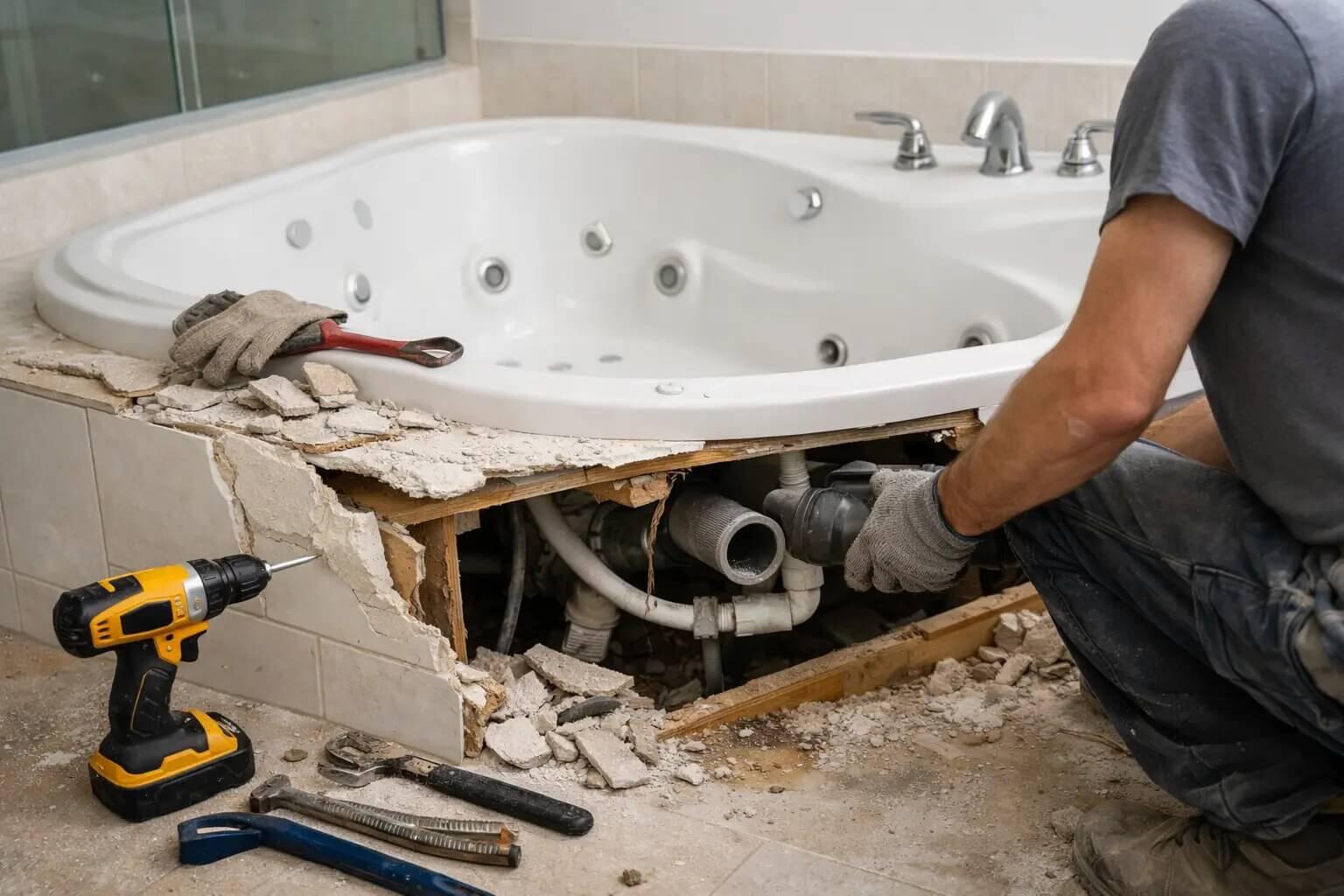
If you're working out how to remove a spa bath, the first thing to know is that it is not quite the same job as taking out a standard bath. A spa bath adds pumps, pipework, electrical connections and often a more substantial frame, so the removal needs a little more care. Done properly, it clears the way for a smoother bathroom renovation and helps you avoid damage to tiles, flooring and services you may want to reuse.
For many homeowners, the bath is coming out because the room is being modernised, the old system is no longer working as it should, or the layout needs to change. Whatever the reason, a calm, methodical approach is what protects the finish of the rest of the bathroom and keeps the project moving in the right direction.
Before you remove a spa bath
Start by identifying exactly what type of spa bath you have. Some are built into a tiled surround with a removable front panel, while others sit within a timber frame or boxed-in bath panel. The way it was installed affects how much you need to dismantle before you can move the bath itself.
You should also check whether the pump, control system, and electrical components are accessible. In many cases, there will be an access panel for servicing. If there is no obvious route in, you may need to remove a bath panel, a section of boxing, or, in some cases, a few tiles. This is where patience matters. If you are planning to keep the surrounding finishes, it is worth taking more time at this stage.
Before touching anything, make sure the bath is fully empty and dry. Spa baths can retain a little water in the pipework, so it is sensible to keep towels, a shallow tray and a bucket close by.
How to remove a spa bath step by step
The safe order is always isolation first, then disconnection, then removal. That sounds straightforward, but with a spa bath there are usually a few more components involved than people expect.
Isolate the water supply
Turn off the water supply to the bath. If you have local isolation valves on the hot and cold feeds, use those. If not, you may need to shut off the mains water. Once isolated, open the taps to release any remaining pressure.
If the bath has a shower mixer or filler mounted on the rim, bear in mind that those pipe connections may limit how far you can move the bath until they are disconnected underneath.
Isolate the electrical supply
This is the point where a spa bath differs most from an ordinary bath. The pump and any electronic controls will be wired into the electrical system, often via a fused spur or a dedicated supply. That circuit must be switched off and proved dead before any disconnection takes place.
If you are not qualified and confident with electrical work, this part is best handled by a registered electrician. In the UK, bathroom electrics deserve extra caution because of the location and the safety regulations involved. It is rarely worth taking a chance here.
Remove the bath panel or gain access
Once the services are isolated, remove the front panel or open the access area so you can see the underside of the bath. You are looking for the waste connection, the water feeds, the pump, any flexible hoses and the electrical supply point.
Some installations are neat and accessible. Others are more tightly boxed in. If sealant has been used heavily around the edge of the panel, cut it carefully with a sharp knife before trying to ease anything away. Pulling too hard can crack surrounding tiles or damage plasterboard.
Disconnect the waste
Place a bowl or tray beneath the waste trap before loosening it. Even with the bath drained, there is often some residual water sitting in the trap and pipework. Disconnect the trap and waste fittings gently, especially if the pipework is older plastic that may have become brittle.
If the waste is difficult to access, you may need to free part of the bath from the wall before the connection can be fully removed. That is normal, but do not force the bath away while the waste is still firmly attached.
Disconnect the water feeds and spa components
With the water isolated, disconnect the hot and cold feeds serving the taps or filler. Then turn your attention to the spa system itself. Depending on the model, there may be hoses between the pump and jets, as well as electrical leads for controls, lights or sensors.
Take a few photos before disconnecting anything. Even if the bath is not being reused, it gives you a clear record of what was installed and can help your fitter understand the previous layout. If you are replacing the bath with a new whirlpool model, those details can be useful when planning pipe routes and access.
Cut through the sealant and release the fixings
Most baths are secured with silicone around the top edge and often brackets fixing the rim to the wall. Use a knife or sealant tool to cut through the silicone bead cleanly. Then look for screws, clips or brackets holding the bath in place.
This is another stage where rushing causes unnecessary damage. If the bath will not move, it is usually because one fixing has been missed rather than because it needs brute force.
Lifting the bath out
A spa bath is generally heavier and more awkward than a standard acrylic bath. The shell itself may not seem too substantial, but the added pump, motor, pipework and support structure change that quickly. In some cases, the bath may also sit on a timber cradle or reinforced frame that needs to come out separately.
Two people is the minimum for most removals. For larger corner baths or baths installed in tight spaces, three people can make the job far safer. Lift evenly, keep the bath upright where possible, and plan the route out of the room before you start moving it.
If the bathroom door, landing or stairs create a difficult exit, you may need to remove taps, panels or fittings first to reduce bulk. Occasionally, when a bath is badly damaged or not being kept, it may be easier to dismantle parts of the surround or framework rather than trying to manoeuvre the entire unit out in one piece.
Common problems when removing a spa bath
One of the most common issues is discovering hidden fixings after the bath seems ready to move. Another is finding that the tiles were cut tightly around the bath rim, which means removal can disturb the edge finish. Neither problem is unusual, but both mean the job can take longer than expected.
There is also the question of what sits beneath the bath. Once it is out, you may uncover damp, ageing flooring, old pipework or electrical work that is due for improvement. That can feel like a setback, but in practice it is often the right moment to correct those issues before the new bath goes in.
If your aim is a more polished, luxury result, this is worth seeing as an opportunity rather than a nuisance. A spa-style bathroom works best when the unseen practical details are as sound as the visible finishes.
Should you remove a spa bath yourself?
It depends on your experience and on how the bath was installed. If the unit is easy to access, the plumbing is straightforward, and a qualified electrician can isolate and disconnect the power, a confident home improver may be able to handle the rest.
If the bath is heavily tiled in, the electrics are unclear, or you are trying to preserve expensive finishes, professional help is usually the better route. The labour cost can be justified very quickly if it prevents damage to walls, floors or new fixtures waiting to be installed.
That is especially true if the removal is only one part of a full bathroom upgrade. In those situations, keeping everything on programme matters just as much as taking the old bath out.
What to do after the bath is removed
Once the bath is out, clean the area thoroughly and inspect the floor, walls, waste position and supply pipework. This is the time to check levels, repair surfaces and confirm dimensions for the replacement bath or new layout.
If you are moving from an older spa bath to a newer model, do not assume the connections will align perfectly. Waste locations, access requirements and electrical specifications vary from one design to another. Specialist advice can save a lot of adjustment work later, which is why many homeowners prefer to buy from dedicated retailers rather than general bathroom suppliers.
Finally, think about disposal. A spa bath cannot always be treated like standard bathroom waste because of its mixed materials and electrical components. Your local council recycling centre may accept it, but it is worth checking the requirements first. If a contractor is carrying out the renovation, ask whether disposal is included in the quote.
A spa bath removal is one of those jobs that rewards care more than speed. Take the time to isolate everything properly, protect the room around it and get help where needed. Once the old bath is out cleanly, you are in a far better position to create the kind of comfortable, refined bathroom that feels good every single day.